Average Reviews:

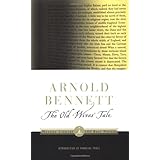
(More customer reviews)Are you looking to buy The Old Wives' Tale (Modern Library Classics)? Here is the right place to find the great deals. we can offer discounts of up to 90% on The Old Wives' Tale (Modern Library Classics). Check out the link below:
>> Click Here to See Compare Prices and Get the Best Offers
The Old Wives' Tale (Modern Library Classics) ReviewI'm certainly not the only person in the world who thinks of this book as a masterpiece. The fact that H.G. Wells, Henry James, and Virginia Woolf all praise this book as being so is one of the reasons I picked it up. In spite of that, I really read it without set expectations.Briefly, to say what has already been said before, The Old Wives Tale is exactly that - a tale of three women who marry in very different circumstances. Mrs. Baines, the mother, is a life who is only briefly touched upon. However, the seperate lives of the two sisters, Sophia and Constance, are the crux of the book. Each life takes its' turn. We are first told about Constance, then about Sophia, and finally, about their reunion. Constance, whose name is not a coincidence, lives a simple provincial life, and Sophia, whose name also matches her persona, chooses romance and adventure. There is only one villain, and yet, he is perhaps the most powerful and chilling of all villains, Time. His grasping, clutching, suffocating presence is ever felt throughout the book, and looms even larger once that final page is turned. In the end, Sophia and Constance each pay the price for their choices, and the true cost of those choices is left for the reader to decide. As unique as we are, we will each believe something different about Sophia and Constance in the end, and that is precisely the point.
To sum up the experience of The Old Wives Tale, a tale of three women living their lives, and their lives changing them (or perhaps not changing them, is that it is the most honest approach to human psychology I have ever read. The lives we read about, Mrs. Baines, Sophia, Constance, and even those who surround them, could be anyone's. In fact, most of us can find someone in this book we could point to and say "that's me". No character, no matter how brief their exit or entrance into this story, is insignificant. Each person gives us a fresh perspective on the human response to events and to, of course, other humans. The three main characters are presented with sheer, unsympathetic, yet respectful honesty. We are not introduced to inhuman, perfect, idealistic souls in this book. Nor are we looking through the eyes of the wicked. Instead, we are searching the souls of ordinary people and in the end, are left with a question about our own existence.
In fact, it should be a large clue to readers when they see that the title of the fourth section is, What Life Is. It is here that something occurred which I totally unexpected, and it left me quite shaken - in fact, desperate. I found that I had been brought from the comfortable vantage point of observing these fictional lives, which are at times inexplicably amusing and heroic, to a sudden uncomfortable sensation that the characters were real and had turned toward me - the reader - begging the question "What of your life? What have you done with it? What have you accomplished?"
That subtle change of vantage point was shocking, and ingenious. Without criticizing his own creation, the author was able to communicate the importance of living our lives to the fullest without telling us how. This fact alone shows great wisdom. Sophia and Constance experience remarkable things, no more remarkable than most people, but remarkable just the same. Each reacts differently because they are different, and each has a different idea about how to find happiness and how to deal with life's disappointments. Both are frequently of the opinion that they could improve someone else's life, yet have not found real satisfaction in their own. Each makes mistakes, and each perform the heroic. The author will on the same page be blunt about their faults and tender with their plight. He tells their story without judgement, and yet in the end, you feel you have read a very wise judgement on the nature of the human race. Here, reader, you will find no prescription for life, but a question that begs a diagnosis. The author makes it starkly clear that the remedy, or whether a remedy is even required, is up to you.
The Old Wives Tale is not a dark story. It is not a comedy. It is not high adventure or mystery. In fact, it is many of these things put together to create something REAL. And it has shaken me to the core.The Old Wives' Tale (Modern Library Classics) OverviewWith a New Introduction by Francine ProseCommentary by Rebecca West, W. Somerset Maugham,Virginia Woolf, H. G. Wells, Henry James, and J. B. Priestley" [Arnold Bennett's] superb Old Wives' Tale, wandering from person to person and from scene to scene, is by far the finest 'long novel' that has been written in English and in the English fashion, in this generation."--H. G. WellsFirst published in 1908, The Old Wives' Tale affirms the integrity of ordinary lives as it tells the story of the Baines sisters--shy, retiring Constance and defiant, romantic Sophia--over the course of nearly half a century. Bennett traces the sisters' lives from childhood in their father's drapery shop in provincial Bursley, England, during the mid-Victorian era, through their married lives, to the modern industrial age, when they are reunited as old women. The setting moves from the Five Towns of Staffordshire to exotic and cosmopolitan Paris, while the action moves from the subdued domestic routine of the Baines household to the siege of Paris during the Franco-Prussian War. "Like Wordsworth, [Arnold Bennett] has triumphed over the habitual; he has not let it disguise the particle of beauty from him."--Rebecca WestARNOLD BENNETT (1867-1931) looked to Flaubert, Maupassant, and Balzac for inspiration in the fashioning of his own acutely realistic novels, including his masterpiece, The Old Wives' Tale (1908). His first novel was A Man from the North (1898), and he is also known for his Clayhanger trilogy (1910-16).The author of thirteen books of fiction, FRANCINE PROSE is a fellow of the New York Institute for the Humanities and the New York Public Library's Center for Scholars and Writers.
Want to learn more information about The Old Wives' Tale (Modern Library Classics)?
>> Click Here to See All Customer Reviews & Ratings Now

0 comments:
Post a Comment